
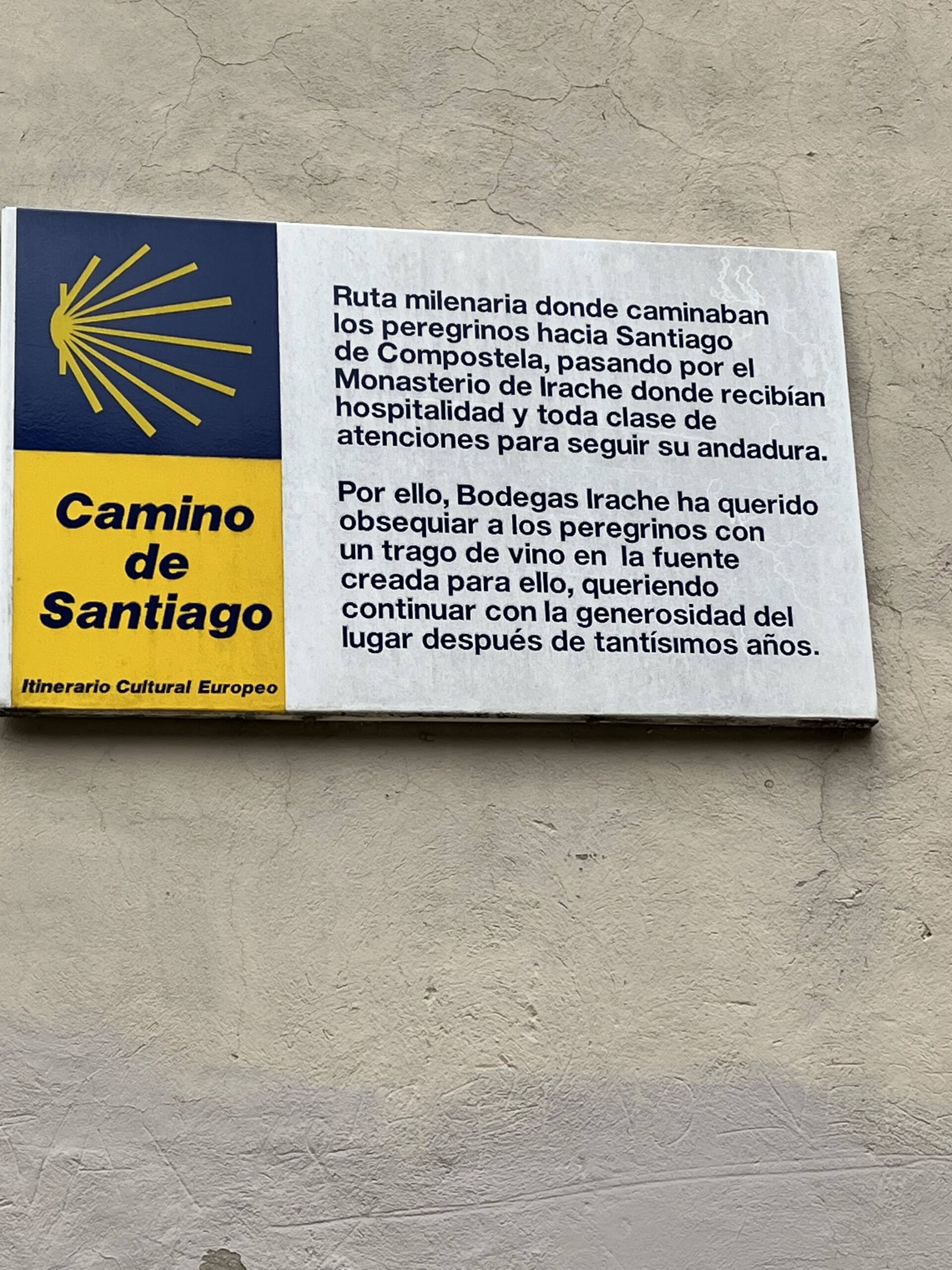
Today, we are exploring a region that I have had the honor of visiting—one that left a permanent mark on my wine-loving soul. Navarra is one of those wine regions that quietly waits for you to notice it. It sits there, just east of Rioja and north of Aragón, stretching from the Pyrenees down to the Ebro River. Somehow, it gets described as being “next to” something else far more often than it gets described as itself.
But here’s the thing: Navarra is not a supporting character.
It’s a region of dramatic contrasts, of mountains and desert-like plains, of pilgrims and kings, of rosado revolutions and Garnacha comebacks. It’s a place I’ve had the privilege to walk through its vineyards, tasting its legendary vegetables straight from the source, and feeling just how layered this region truly is. So today, we’re going to give Navarra its well-deserved moment. Pour something Spanish if you have it, and let’s go!
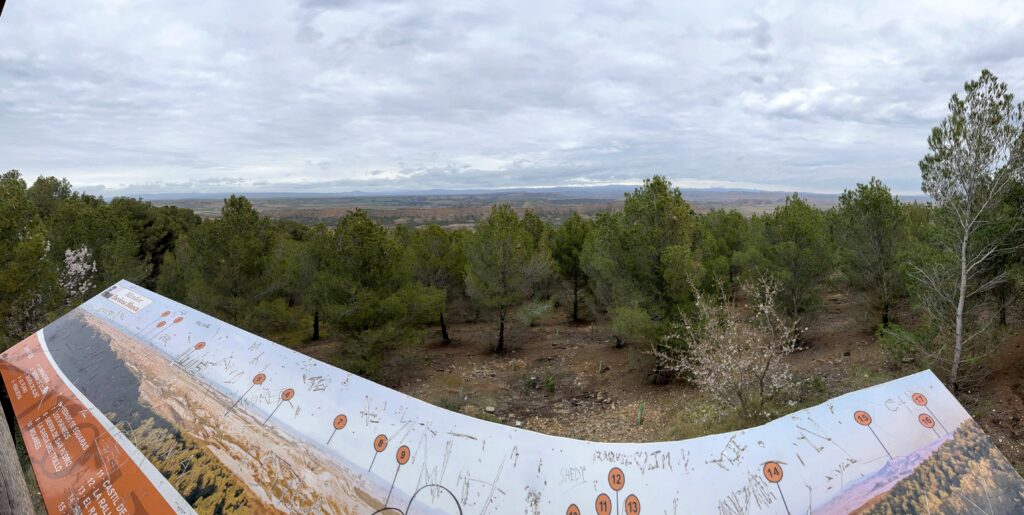
Where Climates Clash: The Five Subzones
To understand the wine of Navarra, you have to understand its unique geography. It is a geographical anomaly where three completely different macroclimates—the Atlantic, the Continental, and the Mediterranean. All share one single administrative boundary. As the landscape drops from cool mountain terrain down to sunbaked river plains, the wine world officially recognizes five distinct subzones:
-
Baja Montaña (The Lower Mountain): Located in the northeast at the foot of the Pyrenees, this Atlantic-dominated zone features a short, cool growing season. Grapes ripen with agonizing slowness, preserving incredible natural acidity. This is the spiritual home of traditional Navarra Garnacha, producing pale, perfumed, pinot-esque red wines that smell like wild strawberries and white pepper.
-
Valdizarbe: Tightly hugging the historic path of the Camino de Santiago, this green valley sits right on the boundary line between Atlantic humidity and Continental dryness. Deep, moisture-retaining clay mixed with chalky limestone yields wines of incredible balance. Tempranillo thrives here, developing a soft, plush, and elegant structure.
-
Tierra Estella: Bordering the Basque Country to the west, this subzone is a maze of rugged hills and protected valleys heavily packed with active limestone and chalk. It is the absolute sweet spot for Navarra’s premium white wine movement, where winemakers craft world-class, barrel-fermented Chardonnays with a rich texture and a laser-sharp, mineral-driven beam of acidity.
-
Ribera Alta (The Upper Riverbank): Sitting on a vast, elevated central plain around the historic town of Olite, this zone is the ultimate viticultural chameleon. Its complex tapestry of alluvial silt, gravel, and deep clay allows wineries to grow almost anything successfully. It is the epicenter of Navarra’s brilliant experimentation with international varieties like Cabernet Sauvignon and Merlot.
-
Ribera Baja (The Lower Riverbank): At the absolute southernmost tip, this hot, flat, and dry zone sits on the doorstep of the Bardenas Reales—one of Europe’s only true deserts. In poor, gravelly river silt and under a relentless sun, late-ripening old-vine Garnacha thrives, producing rich, powerful, deeply savory reds bursting with dark plum, licorice, and wild thyme.
The Camino de Santiago: Wine as Pilgrim Fuel
The open-minded, experimental soul of Navarra wasn’t born in a modern corporate spreadsheet; it was forged along the dusty paths of the Camino de Santiago. For over a thousand years, millions of pilgrims have walked this exact dirt. In the Middle Ages, drinking surface water was a risky game of Russian roulette with disease. Wine, because of its alcohol content, was safely antiseptic, vital nutrition, and a natural painkiller for blistered feet.
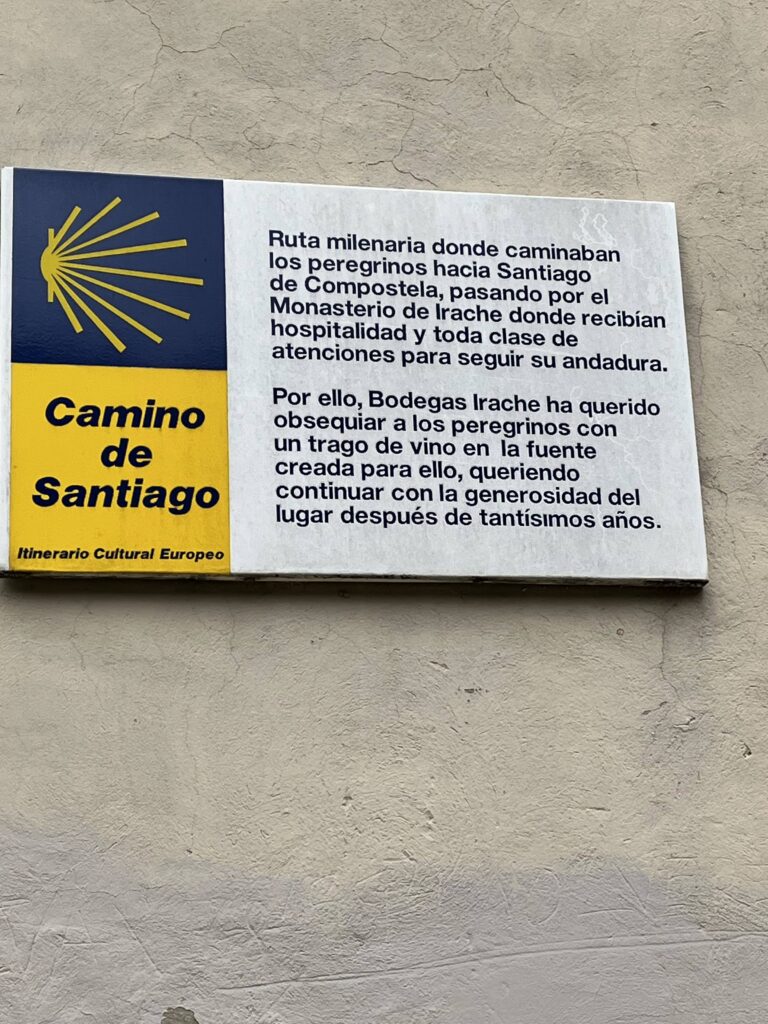
Monasteries along the route became massive hospitality operations, planting vast vineyards to fulfill their holy duty of providing shelter, bread, and wine to weary travelers. In the town of Ayegui, you can still witness this living history at Bodegas Irache, where a literal Wine Fountain built into the exterior stone wall dispenses free red wine to passing pilgrims!
Because the Camino was essentially the internet of the Middle Ages, travelers from Burgundy, Bordeaux, and the Rhône Valley carried grape cuttings tucked into their cloaks across the mountains. When Navarra officially authorized international grapes like Cabernet and Chardonnay in the 1980s, it wasn’t a modern marketing gimmick—it was a historical homecoming.
The Aging Revolution: Breaking the Rules
Navarra historically aligned its winemaking closely with Spain’s traditional, highly regulated aging tier system for its red wines:
-
Crianza: Minimum 2 years total aging, with at least 12 months in oak barrels.
-
Reserva: Minimum 3 years total aging, with at least 12 months in oak and a mandatory period in the bottle.
-
Gran Reserva: Minimum 5 years total aging, requiring a whopping 24 months in oak and 2 years in the bottle.
While those wood-aged Reservas drink like a comforting, leather-and-spice hug, a quiet, powerful revolution is taking over modern Navarrese cellars. A new generation of passionate winemakers is moving away from heavy extraction and new American oak. Instead of hiding old-vine Garnacha behind a wall of vanilla and coconut, they are embracing large French oak foudres, concrete eggs, and ancient-style clay amphorae to prioritize transparency of terroir.
To maintain total artistic freedom, many of the most thrilling, critically acclaimed wines coming out of Navarra today ignore the traditional aging labels entirely, opting for the simple classification of Genérico or Cosecha. It’s a bold declaration of independence, letting the fruit and the specific vintage speak directly to your palate without state-mandated timelines getting in the way.
Three Fun Facts to Impress Your Wine Friends
-
Adrenaline and Tradition: Navarra’s capital city, Pamplona, is home to the world-famous Running of the Bulls (El Encierro) during the festival of San Fermín every July. That fearless intensity is a mindset local winemakers take straight out into their rugged, high-altitude vineyards.
-
The Sovereign Streak: Before it was ever absorbed into modern Spain, Navarra was its own fiercely autonomous, independent kingdom. This historical independence is why the region has an innate cultural permission to experiment, welcome European influences, and carve out its own distinct path.
-
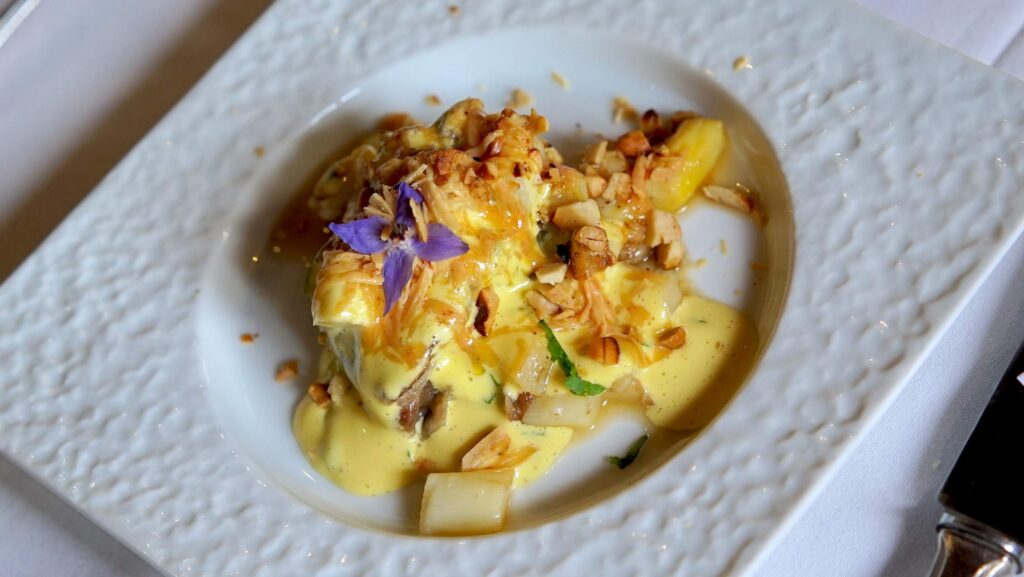
A Vegetable Paradise: Navarra is universally legendary across Spain as a premier culinary garden. Nourished by the Ebro River, it yields the famous Espárrago de Navarra—thick, tender white asparagus harvested entirely by hand at dawn. Pair them with a crisp local Chardonnay or a vibrant Garnacha rosado, and you have absolute food-and-wine heaven.
Keep Your Glass Curious
Navarra is a spectacular landscape of crossroads. Where the mountains meet the river, where the Atlantic clashes with the Mediterranean, and where centuries of pilgrim footsteps have paved the way for a modern winemaking revolution. It doesn’t shout for your attention, and it doesn’t need to imitate its neighbors; it simply endures, quietly producing some of the most dynamic, versatile, and soulful wines in all of Spain.
The next time you are browsing the aisles of your favorite wine shop, skip the predictable choices and look for Navarra. Keep your glass curious, keep exploring, and remember that the greatest joy of wine isn’t about finding perfection; it’s about the thrill of discovery.
Slàinte!
Listen to the full episode here: Navarra: The Defiant Kingdom of Wine & Crossroads