
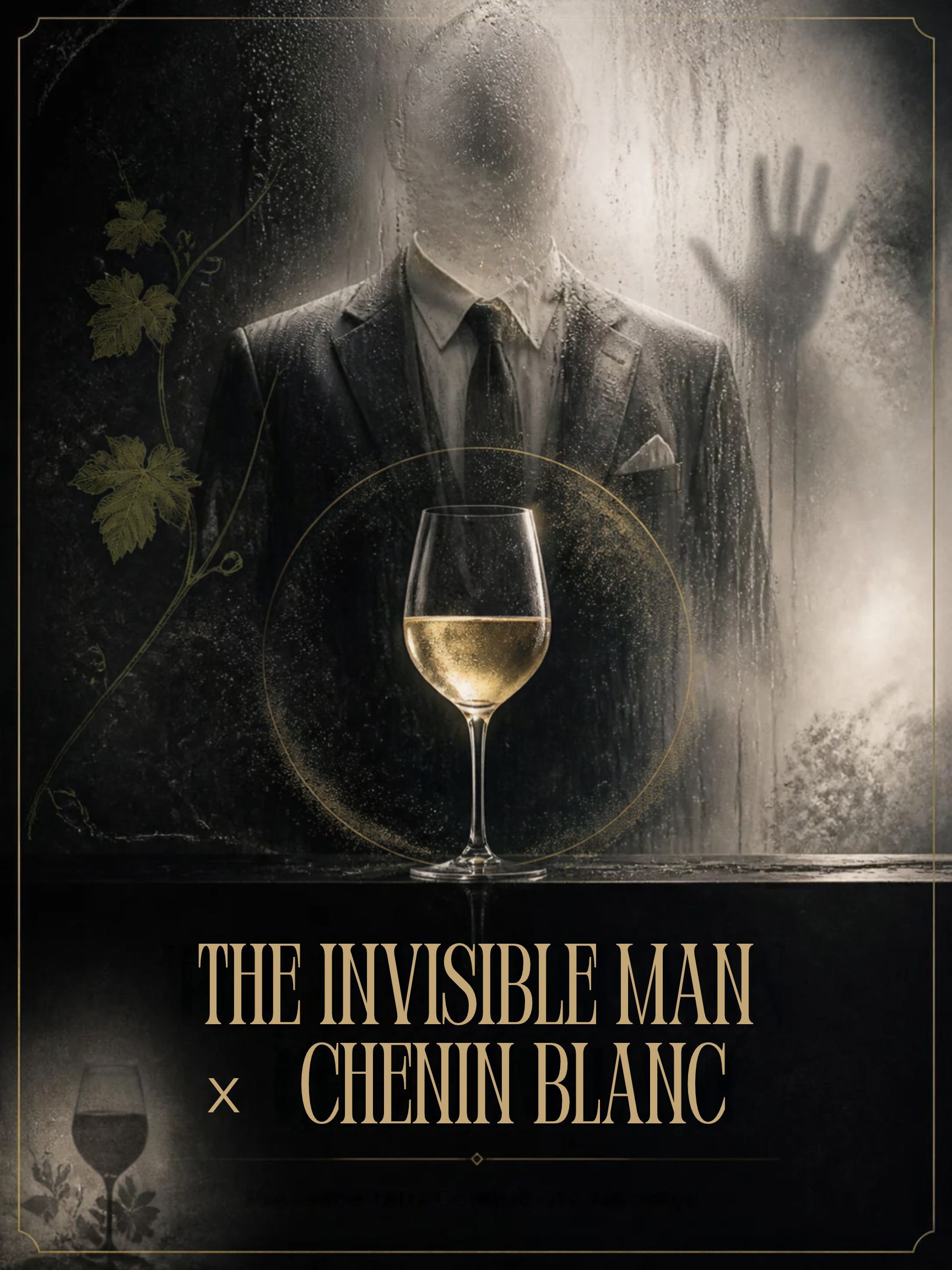
The best psychological thrillers don’t scream, they tighten slowly. They keep you on the edge of your seat wondering what emotion will be extracted from you next. The same can be said for a great Chenin Blanc. At first glance, a psychological thriller and a glass of wine may seem to have little in common, but both Chenin Blanc and The Invisible Man thrive on tension, hidden complexity, and the power of what isn’t immediately seen. Chenin Blanc can appear delicate and approachable, offering bright fruit and mouth watering acidity. But underneath that surface, lies structure, depth and intensity. Similarly to the film, what initially seems subtle, gradually becomes more forceful, compelling and absolutely impossible to ignore.

Chenin Blanc, like The Invisible Man, doesn’t announce everything at once. A young Chenin opens with bright aromas of apple, pear and white flowers. The wine is inviting and pleasant, but that’s only the beginning. It doesn’t immediately reveal the complexity that is waiting beneath. If you have the patience, intricate layers begin to emerge: honey, beeswax, wet stone and even subtle spice. What appears at first to be straightforward gradually unfolds into nuance and complexity.
This is the exact strategy in The Invisible Man. Rather than relying on jump scares, screams and immediate terror, the film builds unease through silence, empty spaces and uncertainty. The viewers are left scanning the screen to find what can’t be immediately seen. The tension accumulates gradually, not instantaneously, making each revelation more impactful than if the director gave us all the information at once. Both reward patience. The longer you spend with them, the more they reveal, proving that suspense and complexity are often most powerful when they unfold slowly.
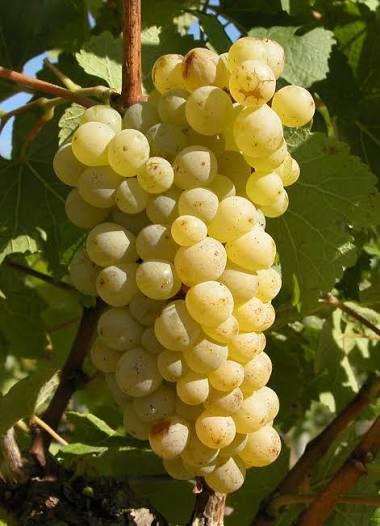
One of Chenin Blanc’s greatest strengths is its ability to balance opposing forces. Depending on where it is grown and how the winemaker crafts the final wine, the grape can display ripe orchard fruit while exuding razor sharp acidity. It can demonstrate a rich, textured palate while remaining fresh and vibrant. Even in its sweeter expressions, Chenin Blanc maintains an incredible sense of balance thanks to the acidity. These contrasting elements work together, to create a wine that is dynamic rather than predictable.
The Invisible Man operates much in the same way. Throughout the film, opposing forces are constantly battling. Cecilia is both vulnerable and resilient. Although you can’t physically see the antagonist, his presence is overwhelming. Moments that appear safe are quickly transformed into uncertainty and danger. Through cinematography the film leaves the audience shifting between belief and doubt, questioning what is real and what exists only in Cecilia’s mind.
Neither Chenin Blanc nor The Invisible Man lets you settle comfortably into expectations. Just when you think you understand what is unfolding another layer emerges. This constant push and pull creates tension which keeps moviegoers glued to the screen for the next scene and wine lovers looking for another sip.
What makes for the most compelling relationship between Chenin Blanc and The Invisible Man is the power of what can’t be seen. While most consumers focus first on aromas and flavors, some of Chenin’s most intriguing characteristics remain hidden beneath the surface. Its vibrant acidity provides incredible structure and energy. Further examination reveals a minerality that adds depth and intrigue and weight and dimension. These elements, although not always immediately identifiable, they absolutely shape the entire experience.
The same principles are what drives The Invisible Man. The film’s immense sense of tension is not what can be seen, rather what can’t. Empty rooms and private moments become charged with possibilities. The use of negative space encourages the viewer to search for clues that reveal what may be there. The audience becomes hyperaware of what may be, even those whose eyes can’t confirm their suspicions.
In both the film and the wine, absence is actually the most powerful presence. The acidity you can’t see and the antagonist you can’t find define the overall experience. By forcing us to pay attention to what lies beneath the surface, Chenin Blanc and The Invisible Man teach us that what remains unseen can leave the greatest impression.
Another parallel between the movie and the wine is the challenge of being underestimated. Despite being one of the most versatile grape varieties, Chenin Blanc often lives in the shadow of Chardonnay and Sauvignon Blanc. Many consumers assume they know what to expect from a bottle before tasting what’s in the glass, overlooking its chameleon-like ability to create a wide range of styles. Its adaptability and complexity are often shunned because it lacks widespread recognition .
Cecilia faces this same challenge throughout The Invisible Man. As she attempts to convince others of the danger she is in, she is repeatedly met with skepticism. Her friends and family struggle to believe what they can’t see, leaving her isolated and increasingly desperate. The audience feels her frustration as she is being stalked, but also the disbelief of those around her. Watching her struggle with what others feel is impossible creates an incredible tension.
In both cases, assumptions become obstacles. Chenin Blanc is often overlooked in favor of more familiar options, while Cecilia’s warnings are dismissed because they challenge conventional thinking. Both ultimately reveal a depth and strength that can’t be ignored and act as a reminder that first impressions often are inaccurate.
Ultimately, both Chenin Blanc and The Invisible Man are defined by perception and patience. Neither reveals everything at once. Instead, they unfold slowly, revealing each layer, sip by sip and scene by scene, offering their depth to those willing to stay with them.
Chenin Blanc begins with brightness and approachability, yet it is the structure beneath the surface that leaves the lasting impression. The Invisible Man begins with restraint, but gradually builds tension becoming increasingly impactful. In both, what seems simple at first becomes more complex over time. What lingers is not what is immediately seen, rather what is slowly revealed and ultimately refuses to be forgotten.
~Slàinte!